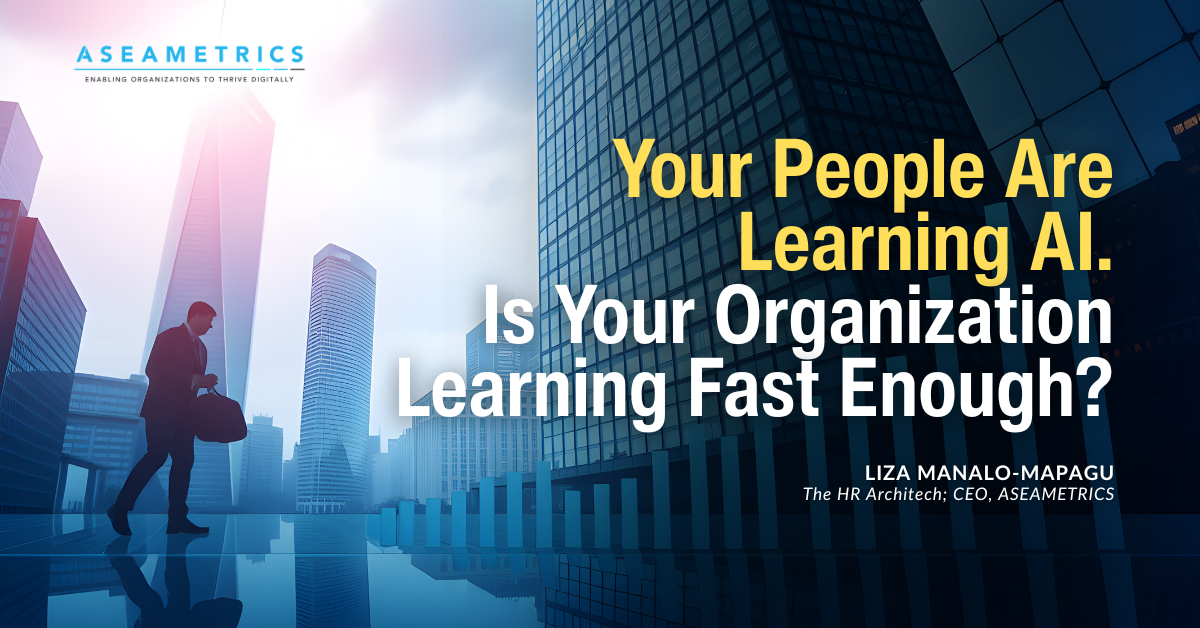
Your People Are Learning AI. Is Your Organization Learning Fast Enough?

Your People Are Learning AI. Is Your Organization Learning Fast Enough?

Do you know what could derail your AI strategy—even after you invest in the right technology?

Your people may be learning how to use AI faster than your organization is learning how to lead it.

Employees are already using AI to write, research, analyze information, prepare presentations, summarize documents, and automate parts of their work. But individual adoption does not automatically translate into organizational readiness.

Leaders still have to answer harder questions. Where should AI actually create value? Which decisions should remain human? What risks are acceptable? How should work change? What skills will people need next? And how will the organization know whether AI is improving performance rather than simply increasing activity?

The World Economic Forum’s Future of Jobs Report 2025 found that 63% of employers identify skills gaps as a major barrier to business transformation, while 59 out of every 100 workers are expected to require reskilling or upskilling by 2030.

The challenge, therefore, is no longer simply whether organizations can acquire AI. It is whether they can continuously build the knowledge, judgment, skills, and readiness needed to use it responsibly and where it creates real business value.

AI Adoption Is Moving Faster Than Organizational Readiness

Do you know what could derail your AI strategy—even after you invest in the right technology? Your people may be learning how to use AI faster than your organization is learning how to lead it. Employees are already using AI to write, research, analyze information, prepare presentations, summarize documents, and automate parts of their work. But individual adoption does not automatically translate into organizational readiness. Leaders still have to answer harder questions. Where should AI actually create value? Which decisions should remain human? What risks are acceptable? How should work change? What skills will people need next? And how will the organization know whether AI is improving performance rather than simply increasing activity? The World Economic Forum’s Future of Jobs Report 2025 found that 63% of employers identify skills gaps as a major barrier to business transformation, while 59 out of every 100 workers are expected to require reskilling or upskilling by 2030. The challenge, therefore, is no longer simply whether organizations can acquire AI. It is whether they can continuously build the knowledge, judgment, skills, and readiness needed to use it responsibly and where it creates real business value. AI Adoption Is Moving Faster Than Organizational Readiness Much of the AI conversation has focused on technology: which platform to use, what can be automated, who should receive access, and how much productivity can be gained. Those are important questions, but they are only the beginning. An organization can have hundreds of employees using AI and still be poorly prepared for it. PwC’s 2026 Global CEO Survey found that only 12% of CEOs reported both revenue and cost benefits from AI, while more than half reported no significant financial benefit. The finding highlights an important distinction: AI activity is not the same as AI value. Giving people better tools can increase experimentation and productivity, but sustainable value requires more. Organizations need leadership alignment, good judgment, appropriate skills, clear governance, redesigned workflows, and the ability to keep learning as AI evolves. McKinsey’s 2026 research found that around 70% of respondents felt personally prepared to use AI, while only 27% of leaders believed their organizations were ready for the broader changes required. That gap should concern leaders. Individuals may be becoming AI-ready before the organization itself does. What Happens When Everyone Starts Using AI? Consider a company that gives employees access to generative AI. HR uses it to draft policies and summarize feedback. Marketing develops content ideas. Sales creates proposals more quickly. Finance explores scenarios. Managers prepare reports and presentations. At first, this feels like progress. Then more complicated questions appear. Can employees enter confidential information into the tool? Who verifies AI-generated recommendations? Which outputs require human review? Should every task that can be automated actually be automated? And how should the organization use the time AI saves? Different teams may also begin using AI in different ways, with different standards and different levels of oversight. The organization now has AI use, but it does not necessarily have AI capability. That distinction will matter even more as AI moves beyond individual assistants into agents, automated workflows, analysis, recommendations, and increasingly complex decisions. Knowing How to Prompt Is No Longer Enough Early AI training understandably focused on prompting and tool use. Those skills still matter, but they are no longer enough. Employees also need to know how to question AI-generated information, verify outputs, recognize limitations, protect sensitive data, and determine when human judgment should take over. Managers need to understand which parts of work can be supported by AI, which should remain human, how quality should be monitored, and how roles and workflows may need to change. Executives face an even broader responsibility. They must decide where AI belongs in the business, what problems it should help solve, what risks are acceptable, and how AI investments connect to strategy and measurable value. This is why AI skilling cannot be treated as a one-time seminar. The technology will continue to evolve, and so must the organization’s ability to use it. From AI Training to Continuous AI Skilling Traditional training often assumes there is a relatively stable body of knowledge to learn. AI challenges that model. New capabilities emerge quickly. Risks evolve. Jobs absorb different combinations of human and machine work. Policies change. Expectations around privacy, security, accountability, and responsible use continue to develop. Organizations therefore need to move from asking, “Have our employees been trained on AI?” to asking, “Are we continuously improving our organization’s ability to use AI responsibly and productively?” That shift turns AI skilling from a training activity into a business capability. Building an AI Readiness Loop A practical way to think about continuous AI capability is through five connected areas: Direction, Judgment, Application, Guardrails, and Renewal. It begins with Direction. Leaders need to connect AI to meaningful business priorities. Not every process needs AI, and not every AI opportunity deserves investment. The first task is to determine where AI can genuinely improve productivity, service, decision-making, innovation, or workforce effectiveness. Next comes Judgment. People need to know when to trust AI, when to question it, and when human accountability must remain decisive. The more capable AI becomes, the more valuable critical thinking becomes. Then comes Application. AI skills become meaningful when people use them in real work. Learning should therefore connect to actual roles, workflows, decisions, and business challenges rather than remain limited to generic demonstrations. This must be supported by Guardrails. Employees need practical guidance around privacy, security, intellectual property, verification, transparency, and human oversight. They need to understand not only what they can do with AI, but what they should do. Finally, there is Renewal. AI readiness has no finish line. Skills, policies, technologies, and workflows will need to be reviewed continuously as the environment changes. Together, these capabilities create an ongoing cycle of learning and adaptation. Where Should Organizations Begin? If AI capability eventually needs to reach the whole organization, it may be tempting to train everyone at once. But the journey should begin with the people who set the direction: Executives and Business Leaders. They determine where investments go, which opportunities matter, what risks are acceptable, how work should change, and what value should look like. Microsoft’s 2026 Work Trend Index found that only 26% of AI users felt their leadership was clearly and consistently aligned on AI. Without that alignment, adoption can quickly become fragmented. One leader may encourage aggressive experimentation while another becomes overly cautious. One department may create clear guidelines while another leaves employees to decide for themselves. Teams may invest in different tools or pursue use cases that are disconnected from business priorities. A workforce cannot consistently execute an AI strategy that leadership has not yet learned to articulate. What This Means for Philippine Organizations For Philippine organizations, the issue is especially relevant as companies balance digital transformation, productivity pressures, talent shortages, changing customer expectations, and the need to reskill employees continuously. In banking, BPO and shared services, manufacturing, retail, healthcare, education, and government, AI has the potential to reshape significant parts of work. But the opportunity will not come simply from deploying more tools. Organizations will need leaders who can make better AI decisions, managers who can redesign work, employees who can use AI with judgment, and learning systems capable of keeping skills current. The better question is not, “How quickly can we get everyone using AI?” It is, “How do we build an organization that keeps getting better at using AI?” Moving From AI Awareness to Enterprise AI Capability This is the organizational challenge behind ASEAMETRICS AI-Q. AI-Q is built around the principle that sustainable AI readiness requires continuous, corporate-wide AI skilling. It focuses on strengthening the knowledge, judgment, applied skills, and organizational readiness needed to use AI responsibly and where it creates genuine value. The journey begins with Executives and Business Leaders, because they establish the direction for everyone else. From there, AI capability can expand across managers, functions, and employees through role-relevant learning and application. The goal is not simply to create more AI users. It is to build an organization capable of making better decisions about AI, applying it to the right problems, and continuously adapting as the technology evolves. The AI advantage will not belong simply to organizations that use AI first. It will belong to organizations that keep learning how to use it better. So perhaps the most important question for leaders today is not, “Are our people using AI?” It is: “Are we building an organization capable of leading what AI makes possible next?” For organizations beginning that journey, ASEAMETRICS AI-Q provides a starting point for building continuous enterprise AI capability—beginning with the executives and business leaders who set the direction.

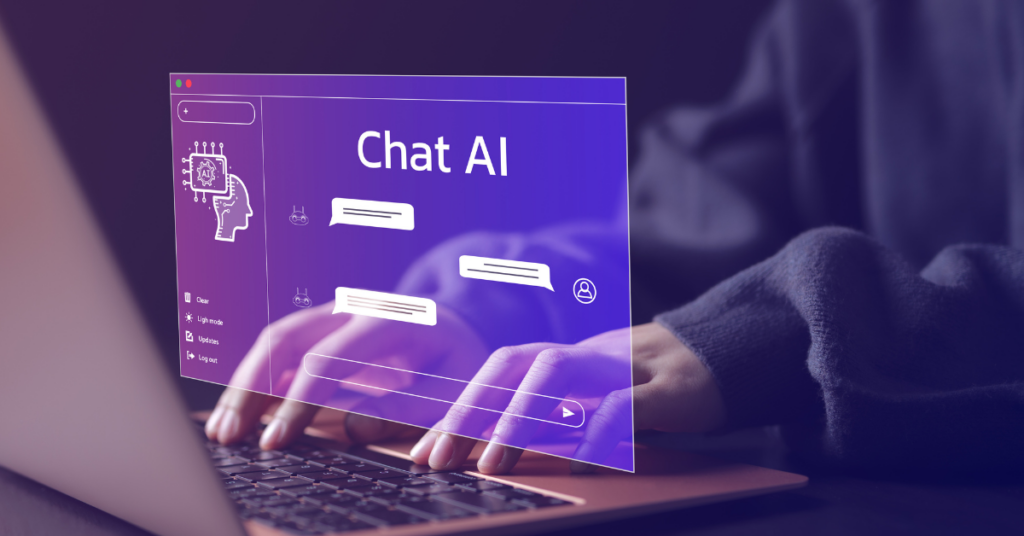

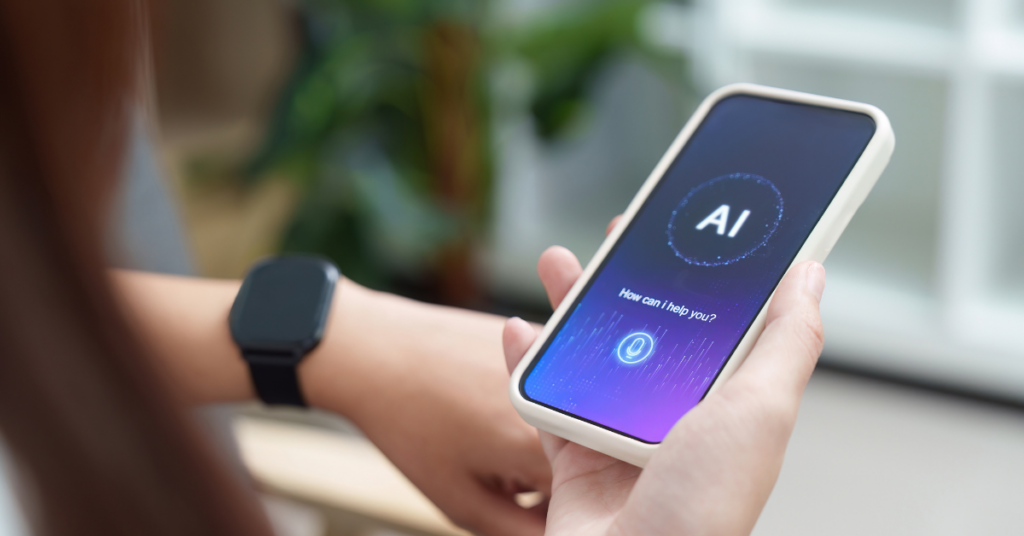



Much of the AI conversation has focused on technology: which platform to use, what can be automated, who should receive access, and how much productivity can be gained.

Those are important questions, but they are only the beginning.

An organization can have hundreds of employees using AI and still be poorly prepared for it.

PwC’s 2026 Global CEO Survey found that only 12% of CEOs reported both revenue and cost benefits from AI, while more than half reported no significant financial benefit. The finding highlights an important distinction: AI activity is not the same as AI value.

Giving people better tools can increase experimentation and productivity, but sustainable value requires more. Organizations need leadership alignment, good judgment, appropriate skills, clear governance, redesigned workflows, and the ability to keep learning as AI evolves.

McKinsey’s 2026 research found that around 70% of respondents felt personally prepared to use AI, while only 27% of leaders believed their organizations were ready for the broader changes required.

That gap should concern leaders. Individuals may be becoming AI-ready before the organization itself does.

What Happens When Everyone Starts Using AI?

What Happens When Everyone Starts Using AI

Consider a company that gives employees access to generative AI.

HR uses it to draft policies and summarize feedback. Marketing develops content ideas. Sales creates proposals more quickly. Finance explores scenarios. Managers prepare reports and presentations.

At first, this feels like progress.

Then more complicated questions appear. Can employees enter confidential information into the tool? Who verifies AI-generated recommendations? Which outputs require human review? Should every task that can be automated actually be automated? And how should the organization use the time AI saves?

Different teams may also begin using AI in different ways, with different standards and different levels of oversight.

The organization now has AI use, but it does not necessarily have AI capability.

That distinction will matter even more as AI moves beyond individual assistants into agents, automated workflows, analysis, recommendations, and increasingly complex decisions.

Knowing How to Prompt Is No Longer Enough

Knowing How to Prompt Is No Longer Enough

Early AI training understandably focused on prompting and tool use. Those skills still matter, but they are no longer enough.

Employees also need to know how to question AI-generated information, verify outputs, recognize limitations, protect sensitive data, and determine when human judgment should take over.

Managers need to understand which parts of work can be supported by AI, which should remain human, how quality should be monitored, and how roles and workflows may need to change.

Executives face an even broader responsibility. They must decide where AI belongs in the business, what problems it should help solve, what risks are acceptable, and how AI investments connect to strategy and measurable value.

This is why AI skilling cannot be treated as a one-time seminar. The technology will continue to evolve, and so must the organization’s ability to use it.

From AI Training to Continuous AI Skilling

From AI Training to Continuous AI Skilling

Traditional training often assumes there is a relatively stable body of knowledge to learn. AI challenges that model.

New capabilities emerge quickly. Risks evolve. Jobs absorb different combinations of human and machine work. Policies change. Expectations around privacy, security, accountability, and responsible use continue to develop.

Organizations therefore need to move from asking, “Have our employees been trained on AI?” to asking, “Are we continuously improving our organization’s ability to use AI responsibly and productively?”

That shift turns AI skilling from a training activity into a business capability.

Building an AI Readiness Loop

Building an AI Readiness Loop

A practical way to think about continuous AI capability is through five connected areas: Direction, Judgment, Application, Guardrails, and Renewal.

It begins with Direction. Leaders need to connect AI to meaningful business priorities. Not every process needs AI, and not every AI opportunity deserves investment. The first task is to determine where AI can genuinely improve productivity, service, decision-making, innovation, or workforce effectiveness.

Next comes Judgment. People need to know when to trust AI, when to question it, and when human accountability must remain decisive. The more capable AI becomes, the more valuable critical thinking becomes.

Then comes Application. AI skills become meaningful when people use them in real work. Learning should therefore connect to actual roles, workflows, decisions, and business challenges rather than remain limited to generic demonstrations.

This must be supported by Guardrails. Employees need practical guidance around privacy, security, intellectual property, verification, transparency, and human oversight. They need to understand not only what they can do with AI, but what they should do.

Finally, there is Renewal. AI readiness has no finish line. Skills, policies, technologies, and workflows will need to be reviewed continuously as the environment changes.

Together, these capabilities create an ongoing cycle of learning and adaptation.

Where Should Organizations Begin?

Where Should Organizations Begin

If AI capability eventually needs to reach the whole organization, it may be tempting to train everyone at once.

But the journey should begin with the people who set the direction: Executives and Business Leaders.

They determine where investments go, which opportunities matter, what risks are acceptable, how work should change, and what value should look like.

Microsoft’s 2026 Work Trend Index found that only 26% of AI users felt their leadership was clearly and consistently aligned on AI. Without that alignment, adoption can quickly become fragmented.

One leader may encourage aggressive experimentation while another becomes overly cautious. One department may create clear guidelines while another leaves employees to decide for themselves. Teams may invest in different tools or pursue use cases that are disconnected from business priorities.

A workforce cannot consistently execute an AI strategy that leadership has not yet learned to articulate.

What This Means for Philippine Organizations

What This Means for Philippine Organizations

For Philippine organizations, the issue is especially relevant as companies balance digital transformation, productivity pressures, talent shortages, changing customer expectations, and the need to reskill employees continuously.

In banking, BPO and shared services, manufacturing, retail, healthcare, education, and government, AI has the potential to reshape significant parts of work.

But the opportunity will not come simply from deploying more tools.

Organizations will need leaders who can make better AI decisions, managers who can redesign work, employees who can use AI with judgment, and learning systems capable of keeping skills current.

The better question is not, “How quickly can we get everyone using AI?”

It is, “How do we build an organization that keeps getting better at using AI?”

Moving From AI Awareness to Enterprise AI Capability

Moving From AI Awareness to Enterprise AI Capability

This is the organizational challenge behind ASEAMETRICS AI-Q.

AI-Q is built around the principle that sustainable AI readiness requires continuous, corporate-wide AI skilling. It focuses on strengthening the knowledge, judgment, applied skills, and organizational readiness needed to use AI responsibly and where it creates genuine value.

The journey begins with Executives and Business Leaders, because they establish the direction for everyone else. From there, AI capability can expand across managers, functions, and employees through role-relevant learning and application.

The goal is not simply to create more AI users. It is to build an organization capable of making better decisions about AI, applying it to the right problems, and continuously adapting as the technology evolves.

The AI advantage will not belong simply to organizations that use AI first. It will belong to organizations that keep learning how to use it better.

So perhaps the most important question for leaders today is not, “Are our people using AI?”

It is:

“Are we building an organization capable of leading what AI makes possible next?”

For organizations beginning that journey, ASEAMETRICS AI-Q provides a starting point for building continuous enterprise AI capability—beginning with the executives and business leaders who set the direction.

You may reach out to us through our Talent Assessment Development Officer, Charles Benoza at charles.benoza@aseametrics.com.

Ready to help your organization thrive digitally?

ASEAMETRICS provides innovative HR technologies, data-driven insights, and people solutions that help organizations make better talent decisions, strengthen workforce capabilities, and improve performance. Discover how our solutions can support your digital transformation and enable your organization to thrive digitally.

For inquiries, email us at info@aseametrics.com or call us at (02) 8652 1967.

Liza Manalo-Mapagu

About the author

Liza Manalo-Mapagu is the CEO of ASEAMETRICS, a leading HR technology firm driving digital transformation to help people and organizations thrive in the evolving workplace. As one of the pillars of the industry,  she specializes in individual and organizational capability building, HR technology solutions, talent analytics, and talent management. A recognized thought leader in HR innovations and advocate for ethical AI in HR, Liza empowers businesses and HR leaders through innovative strategies that align people, organizations, and technology. She also serves as the Program Director of the Psychology Program at Asia Pacific College, shaping the future of HR through consulting, education, and leadership.

Similar Posts