One Exam Can Change a Life
Do you know how much one examination can shape a person’s future?
For many Filipinos, a single test result can open the door to a dream school, a government career, a professional license, a military post, or a life-changing opportunity. It can determine whether a student enters college, whether a graduate becomes a licensed professional, whether an applicant qualifies for public service, or whether a candidate earns a place in a national institution.
That is the power of high-stakes examinations.
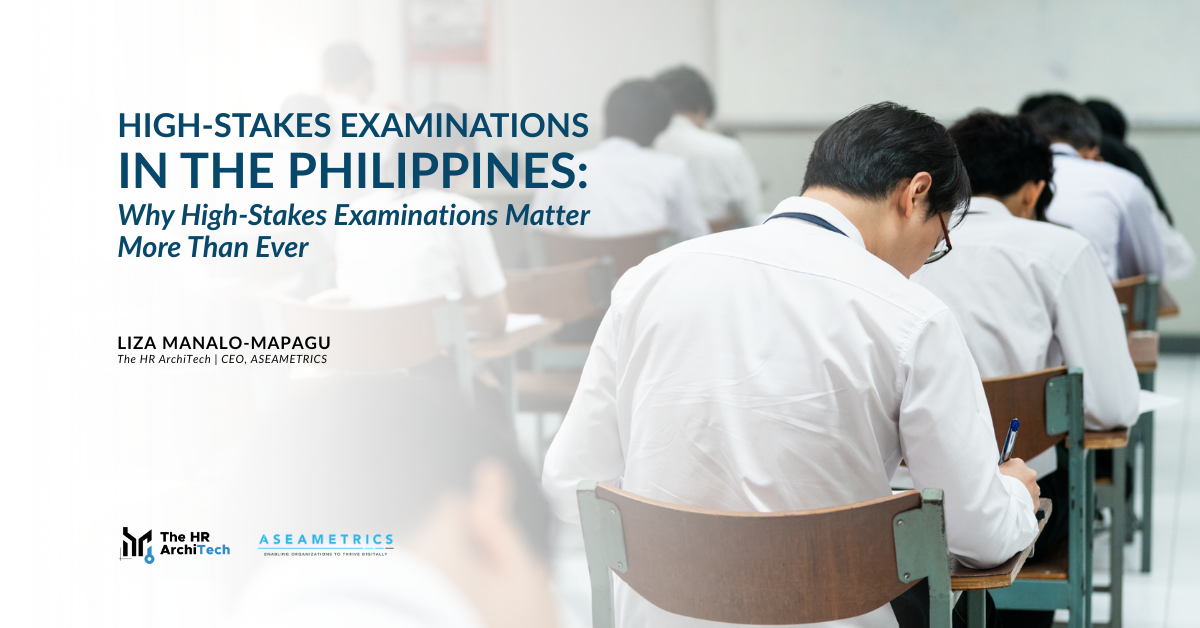
These are not ordinary classroom quizzes or routine assessments. High-stakes examinations are used to make decisions that carry serious consequences for individuals, institutions, and even the country. They influence admission, certification, licensing, employment, promotion, qualification, and selection.
In short: they decide who gets access to opportunity.
Why High-Stakes Exams Matter 
In the Philippines, high-stakes examinations come in many forms: college admission tests, scholarship exams, Civil Service Commission examinations, Professional Regulation Commission licensure examinations, military entrance and promotion exams, competency assessments, board examinations, and institutional examinations used by schools, academies, government agencies, and professional bodies.
These exams serve as gateways.
They help determine who enters our universities, who becomes a teacher, engineer, nurse, accountant, psychologist, soldier, police officer, civil servant, or licensed professional. They influence the quality of talent entering our organizations, industries, and public institutions.
In many ways, high-stakes examinations help shape the quality of Filipino talent.
That is why we cannot afford to treat them lightly.
The Standard: Valid, Reliable, Fair, Secure, and Efficient
When an examination is used to make an important decision, it must be more than difficult. It must be valid, reliable, fair, secure, and efficient.
A valid examination measures what it is supposed to measure. If an exam is designed to assess college readiness, it must reflect the knowledge, skills, and abilities needed to succeed in college. If it is meant to assess professional competence, it must reflect the actual competencies required in the profession.
A reliable examination produces consistent and dependable results. A person’s future should not be affected by a test that is poorly constructed, inconsistently administered, or vulnerable to random errors.
A fair examination gives every examinee a reasonable and equal opportunity to demonstrate what they know and what they can do. It should not favor one group unfairly or disadvantage examinees because of weak test design, poor administration, or lack of security.
And today, more than ever, a high-stakes examination must also be secure and efficient.
This is where the conversation becomes urgent.
The AI Era Has Changed the Rules
We are now in a time when technology can be both a threat and an enabler.
Artificial intelligence, digital platforms, online resources, mobile devices, and emerging tools have changed how people learn, prepare, and take examinations. These technologies create new risks: cheating, impersonation, content leakage, unauthorized assistance, AI-generated answers, and other forms of academic or examination misconduct.
But the same technology that introduces new risks can also help address them.
Technology can strengthen test security, improve identity verification, monitor unusual behavior, protect test content, support better item development, improve reporting, and make examination administration more efficient. It can help institutions design, develop, deliver, and evaluate examinations in a more secure and data-informed way.
The real question is no longer whether technology will affect high-stakes examinations.
It already has.
The better question is: How do we use technology responsibly to protect the integrity, validity, reliability, and credibility of our examinations?
Modernization Is No Longer Optional 
This is a question that regulators, educators, assessment professionals, school leaders, government agencies, national academies, and technology leaders must answer together.
We cannot simply return to the old ways and pretend that the digital and AI-enabled world does not exist. At the same time, we cannot blindly adopt technology without understanding the risks.
What we need is a balanced, informed, and responsible approach.
We need to ask:
- Are our current examinations still secure?
- Are our test development processes ready for the AI era?
- Are our proctoring and monitoring systems enough?
- Are our policies updated?
- Are our item banks protected?
- Are our reports useful for decision-making?
- Are our systems efficient enough to handle growing demands?
- Are we using technology to improve quality, or are we simply digitizing old problems?
These questions matter because the credibility of high-stakes examinations directly affects public trust.
When Exam Integrity Is Compromised, Trust Is Compromised
When people trust the examination system, they trust the result.
They trust that those who passed deserved to pass. They trust that those who were admitted, licensed, promoted, or certified have met the required standard.
This trust is essential in education, government, national service, and professional practice.
But when examination integrity is compromised, the damage goes far beyond one test. It affects institutions. It affects professions. It affects public confidence. It affects the quality of people entering critical roles in society.
That is why the modernization of high-stakes examinations is not just a technical issue.
It is a national talent issue.
It is a governance issue.
It is a quality assurance issue.
It is a public trust issue.
Why This Matters for the Philippines
For the Philippines, this conversation is especially important.
Our country’s greatest resource is Filipino talent. We take pride in our professionals, educators, public servants, uniformed personnel, and skilled workers. But if we want to continue developing globally competitive and future-ready Filipino talent, we must ensure that the systems used to assess, certify, and select them are also future-ready.
The future of talent cannot be built on outdated examination systems.
If the world has changed, then the way we protect, design, and deliver high-stakes examinations must evolve as well.
A Timely Conversation: EXAMNEXT 2026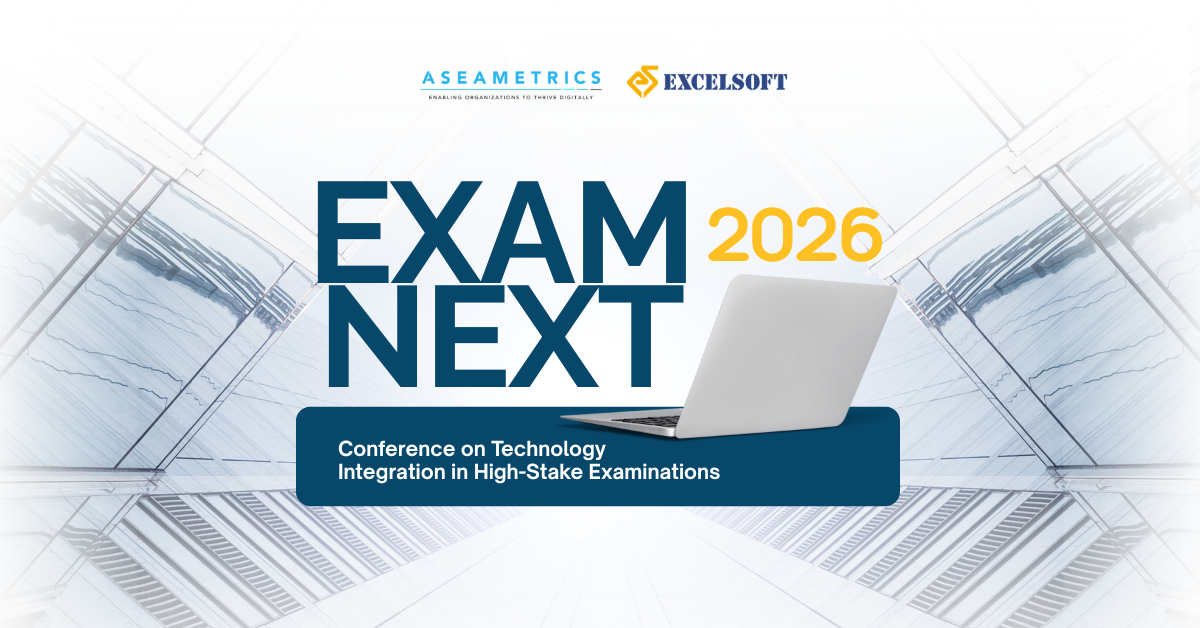
This is the purpose of EXAMNEXT 2026: Conference on Technology Integration in High-Stakes Examinations.
EXAMNEXT 2026 brings together leaders from government, academe, national agencies, regulatory bodies, examination boards, schools, universities, and assessment institutions to discuss how we can protect and modernize high-stakes examinations in an AI-enabled world.
The conversation is timely because the risks are real.
But so are the opportunities.
We need to understand how technology can threaten examination integrity. More importantly, we need to explore how technology can help us build examination systems that are more valid, reliable, secure, fair, efficient, and trusted.
The Future Depends on Getting This Right
At the end of the day, high-stakes examinations do not only measure individuals.
They shape careers.
They shape institutions.
They shape industries.
They shape public service.
They shape the quality of Filipino talent.
And ultimately, they shape the future of the country.
This is why we must get them right.
Be part of a timely and important conversation that can help shape the future of high-stakes examinations in the Philippines.
Join EXAMNEXT 2026 and take part in building examination systems that are more secure, trusted, and future-ready.
To learn more or reserve your slot, send us an email at charles.benoza@aseametrics.com.