“The smartest hiring systems are not built by chance. They are designed for precision.”
— Liza Manalo-Mapagu, The HR ArchiTECH
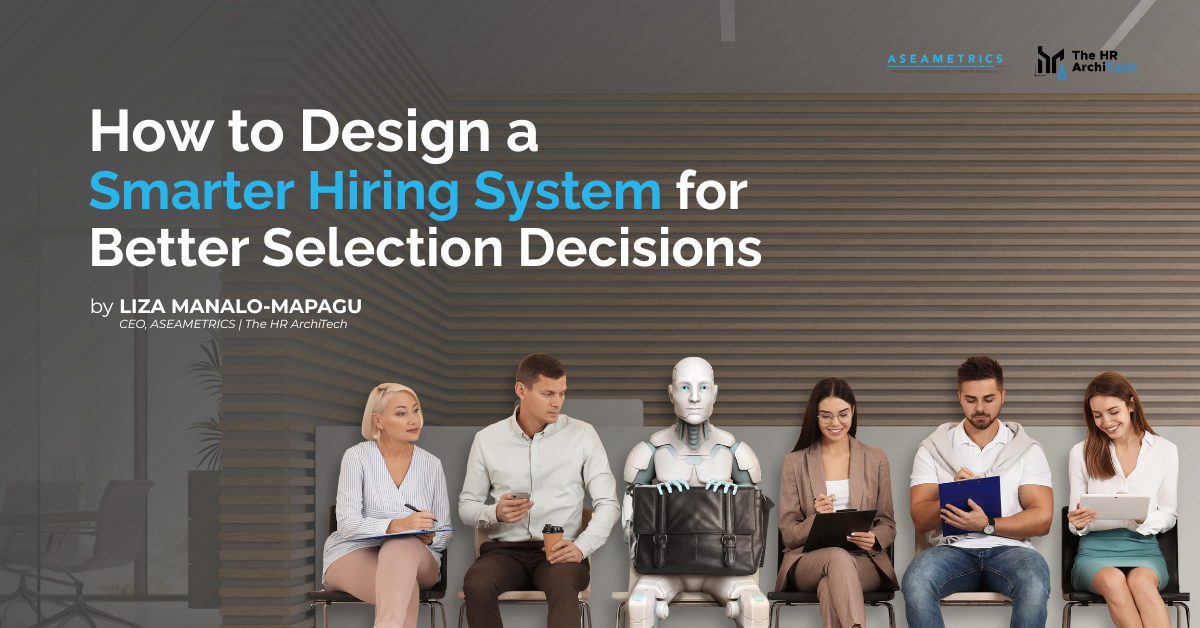
Many Recruitment Teams are under pressure to deliver on the same set of metrics: faster time-to-fill, better quality of hire, lower hiring cost, stronger candidate experience, and less hiring risk. Yet even with more tools, more dashboards, and more sourcing channels, many teams still struggle to hit their targets.
Why?
Because hiring problems are often treated as isolated issues, when in reality, hiring is a system. When one part of the system breaks, the results show up everywhere—in delays, drop-offs, weak hires, inconsistent decisions, and leadership frustration. As the HireDX Playbook explains, the issue is not always the tool itself; often, the team needs to first “X-ray the funnel” and redesign the system around outcomes.
Top 5 reasons Recruitment Teams fail to meet their metrics: 
1. They focus on tools before fixing the process
Many teams assume that adding a new ATS, assessment, or AI screening tool will automatically improve results. But tools alone do not create outcomes. If the workflow is unclear, handoffs are weak, or decision standards are inconsistent, technology simply speeds up the confusion. A strong hiring system starts with process design, not tool buying.
2. They do not clearly define what “qualified” means
One of the biggest hidden causes of weak hiring metrics is vague qualification criteria. When recruiters, hiring managers, and business leaders are not aligned on what good looks like, the funnel becomes noisy. Too many weak candidates enter the process, strong candidates may be missed, and decisions become harder to defend. Better selection starts with clear, role-based signals, not assumptions.
3. They ignore where value is leaking in the funnel
Applicants enter the process, but somewhere along the way, value leaks out. There may be delays in screening, candidate drop-off after long assessments, bottlenecks in recruiter review, or inconsistent interview decisions. Teams often see the symptom but not the leak point. If you do not map the funnel from applicants to hires, you cannot see where speed, cost, and quality are being lost.
4. They rely on weak hiring signals
Not all signals are equal. A polished resume, a good first impression, or an unstructured interview may feel useful, but they do not always predict performance well. Smarter hiring systems review the real signals behind decisions: assessments, work samples, structured interviews, validated criteria, and job-relevant evidence. Without stronger signals, teams make slower and riskier decisions.
5. They cannot build a clear business case for change
Even when Recruitment Teams know something is broken, improvement often stalls because they cannot translate hiring pain into business language. Leaders want to know: What is the real cost of delays? What is the ROI of better screening? What risk will this reduce? What value will it create? If Talent Acquisition leaders cannot connect hiring improvements to business outcomes, approval becomes difficult. That is why ROI, governance, and decision quality must be part of the conversation.
So how do you design a smarter hiring system? 
You start by treating hiring as a designed system, not just a sequence of recruiting activities.
A smarter hiring system looks at:
- how candidates move through the funnel
- what signals are used to screen and select
- how HR, IT, and business work together
- what tools and integrations support the process
- what metrics, guardrails, and governance will build trust
This is exactly what HireDX is designed to do.
Introducing HireDX: Designing Smarter Hiring Systems
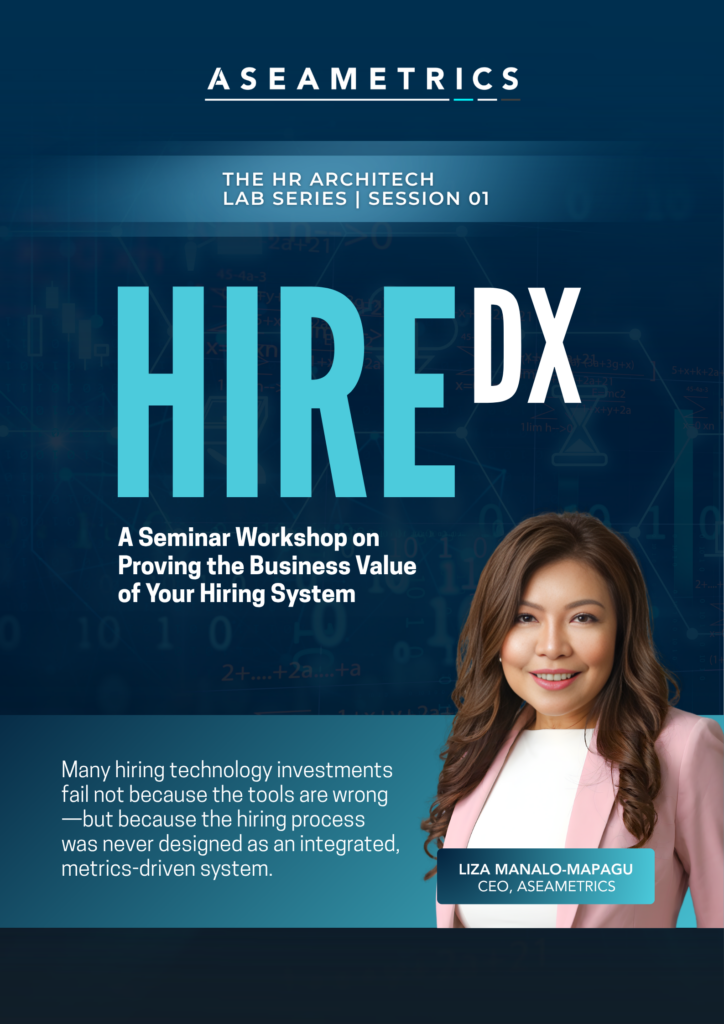
HireDX is ASEAMETRICS’ seminar-workshop and consulting approach for helping organizations diagnose the real causes of hiring underperformance and build a better hiring blueprint. It guides teams through four practical steps:
- The X-Ray – identify where the hiring funnel is leaking value
- Signal vs Noise – review the quality of hiring signals being used
- The Blueprint – align HR, IT, and business around a smarter system design
- The Investment Memo – build the business case for better hiring decisions through ROI and trust.
HireDX is especially useful for organizations that want to improve selection quality, strengthen recruiter capability, review technology fit, and make more confident decisions before investing further in AI-driven hiring tools.
If your Recruitment Team is under pressure to improve speed, cost, quality, and risk outcomes, the answer may not be “more tools.” The answer may be a smarter hiring system.
That is where HireDX begins.
Is your organization looking to build a smarter hiring system?
Through HireDX, ASEAMETRICS can help Recruitment Teams identify where value is leaking in the hiring funnel, improve selection quality, and build a stronger business case for better hiring decisions.
To learn more about the program, here is the HireDX Primer: Access it here; and to explore how the program can support your team, you may schedule an initial exploratory meeting by replying to this email or contacting eryn.cadapan@aseametrics.com.